
Human rights and energy: EU must not replace Russian gas with US imports, Greenpeace warns
Greenpeace International
Brussels – As the European Union (EU) ministers rubber-stamp the EU’s ban on imports of Russian gas, Greenpeace Belgium activists warn them not to replace Putin’s gas with Trump’s. The activists inflated 10-metre-long representations of Putin and Trump sitting on a gas tanker in front of the EU Council headquarters, to symbolise Europe’s dependence on fossil fuel imports from autocrats. An average of two to three tankers carrying liquefied gas from the United States (US) arrive in Europe every day, according to new calculations. Photos are available in the Greenpeace Media Library. Lisa Göldner, fossil fuel campaigner from Greenpeace Germany: “Europe’s strength goes hand in hand with energy independence. The more Europe depends on the United States for energy, the greater the vulnerability to pressure by Trump. Every euro spent on US gas strengthens Trump’s authoritarian agenda at home and imperialist ambitions abroad. The only way for Europe to protect its political independence and achieve true energy security is to phase out fossil gas and accelerate the shift to a fully renewable energy system.” “Banning Russian gas is long overdue and absolutely the right decision. But Europe cannot celebrate breaking free from Putin while locking itself into a new dependency on Trump’s fossil gas,” Göldner adds. Since Trump’s second inauguration on 20 January 2025, EU countries have imported US gas estimated to be worth €28 billion according to a new Greenpeace calculation. Amid repeated threats from Trump against Europe, more than 60 tankers of US gas have arrived in Europe since the start of 2026 alone.[1] The EU’s reliance on the US for gas imports is set to grow. In 2025, EU countries sourced 57% of their liquefied gas imports from the US, a share that could rise to 80% by 2030, according to a recent analysis by IEEFA.[2] Greenpeace is calling on the EU to withdraw from the commitment to import USD750 billion worth of US energy, mainly fossil gas, by 2028, and to immediately halt all negotiations for new purchase agreements with US gas suppliers.[3] Greenpeace is also asking the EU for a plan to end dependence on US gas and terminate existing long-term supply contracts earlier, as well as additional measures to reduce Europe’s gas demand and accelerate the transition to homegrown renewable energy. Since Russia’s full scale invasion of Ukraine in February 2022, Greenpeace organisations around Europe have blocked shipments of Russian oil and gas – in Finland; in Britain; in Belgium (Zeebrugge and Antwerp); in Denmark; in Italy. Greenpeace France also blocked the installation of a liquified gas terminal in Le Havre, warning it could be used to import Russian gas, and Greenpeace Spain shut down a gas power plant in Malaga burning gas from Russia. ENDS Notes Photos are available in the Greenpeace Media Library. [1] According to data extracted from LSEG Data & Analytics on 23 January 2026, from 1 to 23 January 2026, 61 US gas tankers arrived in EU countries. Between 20 January 2025 (Trump’s second inauguration) and 20 January 2026, EU countries imported 82.3 billion m3 of US gas, with an estimated value of €28 billion, based on the daily gas spot market price on the date of arrival as represented in the Dutch TTF Natural Gas Futures. [2] EU risks new energy dependence as US could supply 80% of its LNG imports by 2030 | IEEFA Contacts Manon Laudy, fossil fuels press officer, Greenpeace Belgium: +336 49 15 69 83, mlaudy@greenpeace.org Greenpeace International Press Desk, +31 (0)20 718 2470 (available 24 hours), pressdesk.int@greenpeace.org Texte intégral (780 mots)
Reuse is working. It’s time for major brands like Unilever to help it grow.
Anna Diski and Sarah King
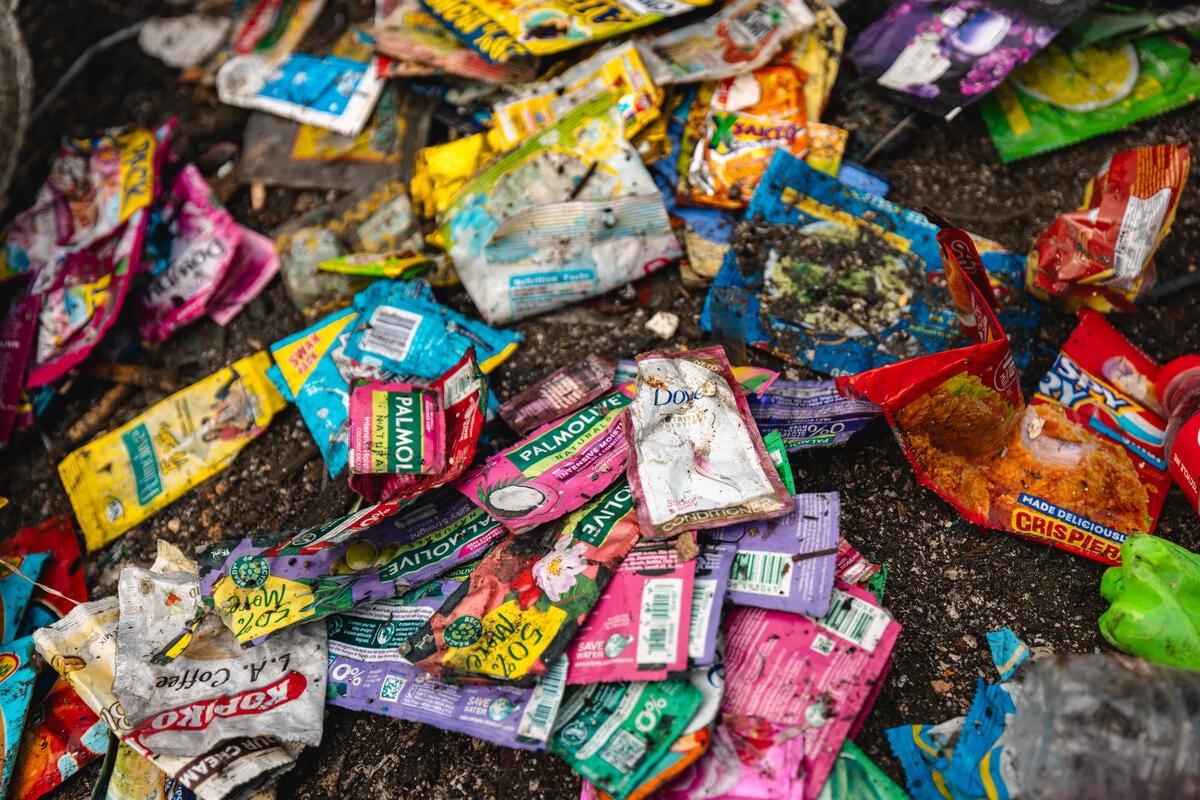
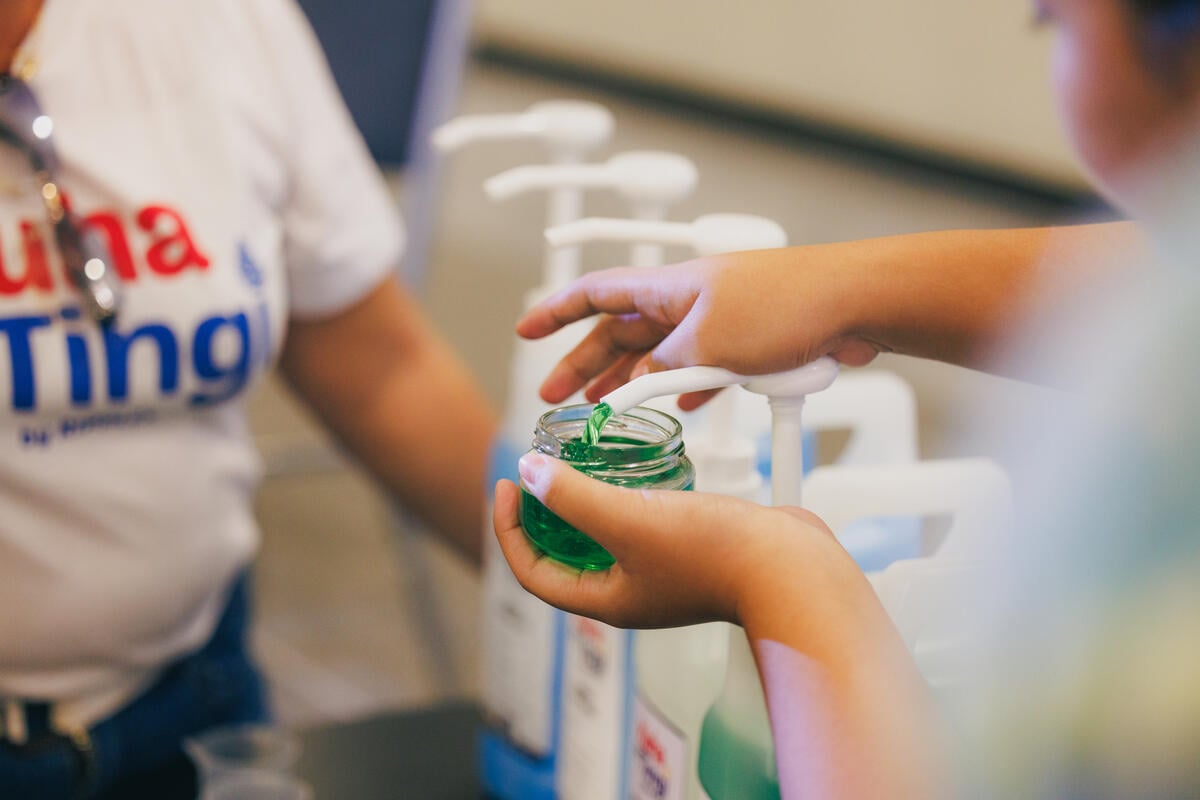
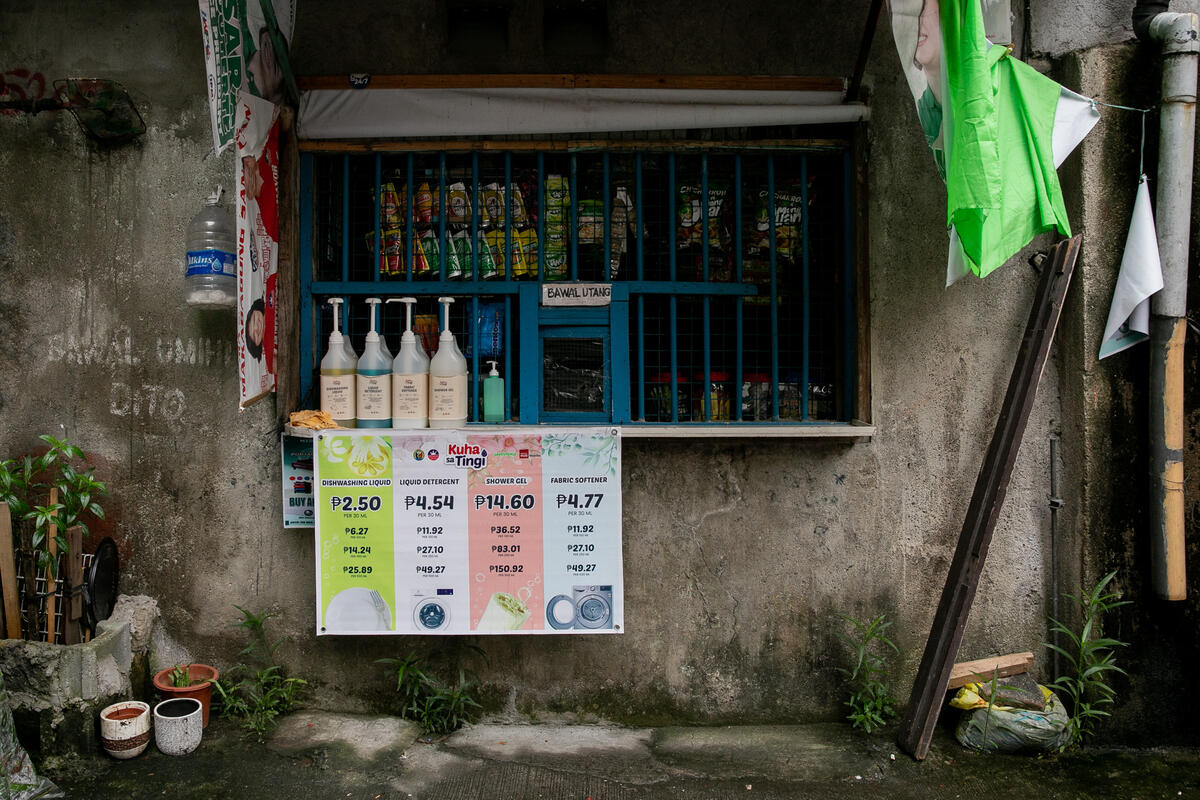
Every day, the plastic pollution crisis worsens, especially in countries flooded with single-use sachets pushed by fast-moving consumer goods companies. But while the crisis grows, communities in Manila, Philippines are proving that a different future is not only possible but already operational. Reuse at scale isn’t a distant ambition. It’s happening right now, despite the companies still profiting from the status quo. The plastics crisis didn’t arrive by accident. Sachets were designed, marketed, and aggressively expanded by multinationals like Unilever as a way to sell small volumes at huge margins. It’s a system built for profit, not sustainability. Unilever alone sells an estimated 53 billion plastic sachets every year. That’s 1,700 pieces of single-use plastic every second, pushed into countries whose waste systems cannot handle them. Sachets persist not because people love them, but because companies refuse to provide alternatives. That deliberate choice has consequences: mountains of waste, blocked waterways, toxic burning, and a rubbish system overwhelmed by volume. Reuse is a system-wide solution to the sachet problem and communities in the Philippines are already showing how. The Kuha sa Tingi initiative, built by Greenpeace Philippines with local governments and community partners, transforms neighbourhood sari-sari stores into refill hubs for everyday items like dishwashing liquid, detergent, and shampoo, eliminating the need for single-use sachets. The Philippines uses an estimated 164 million sachets daily. Kuha sa Tingi offers a scalable alternative. Beginning in Quezon City and San Juan City, it is now expanding across the region through new partnerships. In Quezon City and San Juan City, these neighbourhood stores are quietly reshaping how everyday goods are sold. Kuha sa Tingi and enterprises across Asia and Africa are proving that reuse can outperform sachets economically, socially, and environmentally. This is the environment Unilever claims requires sachets for affordability and access. Yet the success of Kuha sa Tingi proves that argument is outdated and indefensible. If sari-sari stores can run refill systems that benefit consumers and businesses alike, what excuse does a global corporation with Unilever’s resources have? Reuse works in emerging markets, in dense urban settings, and in communities long targeted with sachet-heavy marketing. The only place it ‘doesn’t work’, it seems, is inside boardrooms clinging to a profitable but destructive model. Unilever has the influence, distribution power and capital to make reuse mainstream. These models are ready for corporate investment. A shift to reuse would: Yet Unilever continues pushing billions of sachets into the market while community-led solutions flourish. That’s more than a missed opportunity – it’s an active choice to sustain harm. No company can claim sustainability leadership while driving one of the world’s most polluting packaging formats. Cities, communities, consumers and small businesses are moving reuse forward. What’s missing is the commitment from the companies driving the sachet problem to phase out sachets and phase in reuse models. Unilever should be: Innovation is not the limiting factor here. Corporate will is. It’s time for Unilever to join it – and time to leave the sachet era behind. Anna Diski is a Senior Campaigner from Greenpeace UK. Sarah King is a Senior Strategist for the Plastic Free Future campaign from Greenpeace Canada. Texte intégral (1951 mots)
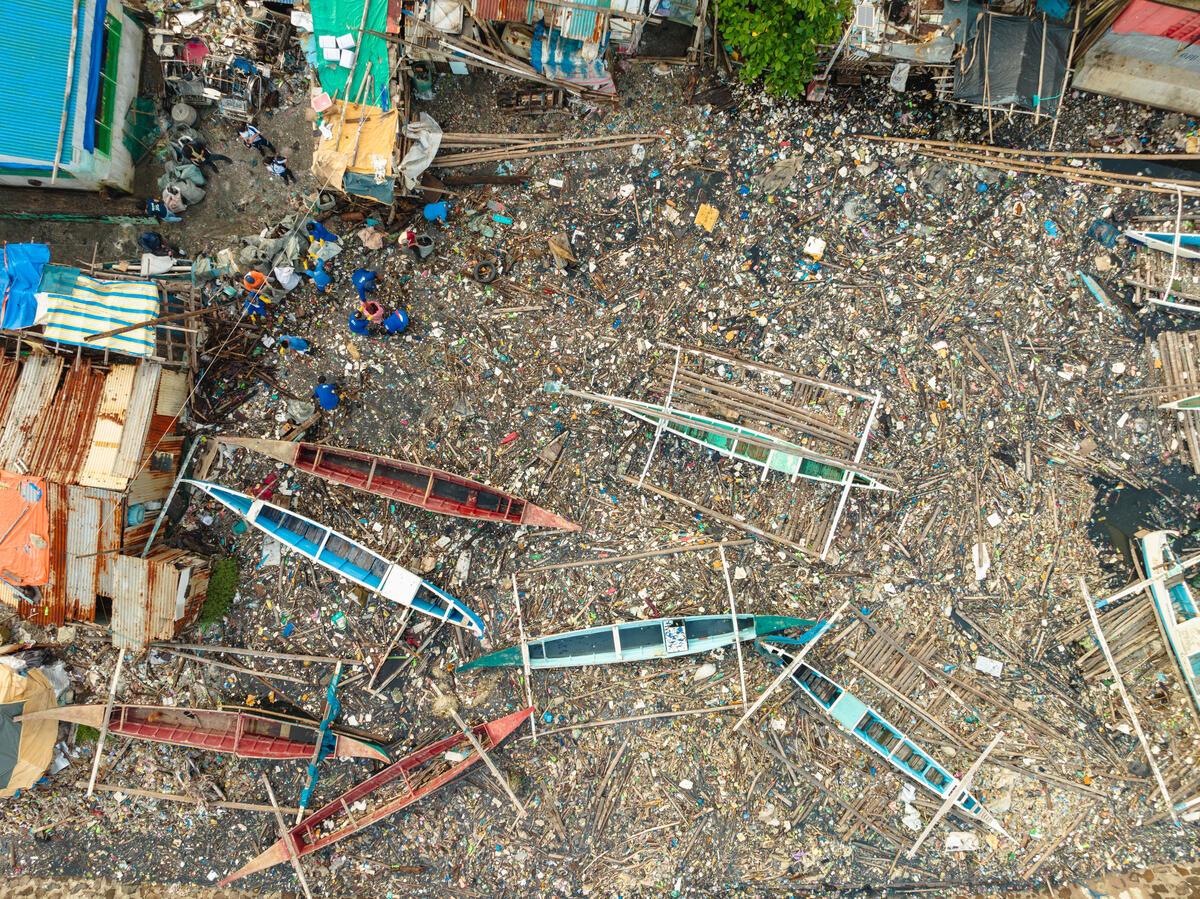
The Problem: Sachet Pollution Is a System Choice
The Proof: Reuse in Action in Metro Manila
What the project is

Key outcomes
Why this matters for Unilever
The Opportunity for Unilever
Unilever Must Join the Movement
Greenpeace Pictures of the Week
Greenpeace International
A creative week in the Greenpeace world, with murals around the globe celebrating the ratification of the Global Oceans Treaty, as well as people power in the streets of Washington D.C, London, and Berlin. Greenpeace has been a pioneer of photo activism for more than 50 years, and remains committed to bearing witness and exposing environmental injustice through the images we capture. To see more Greenpeace photos and videos, visit our Media Library. Texte intégral (1498 mots)
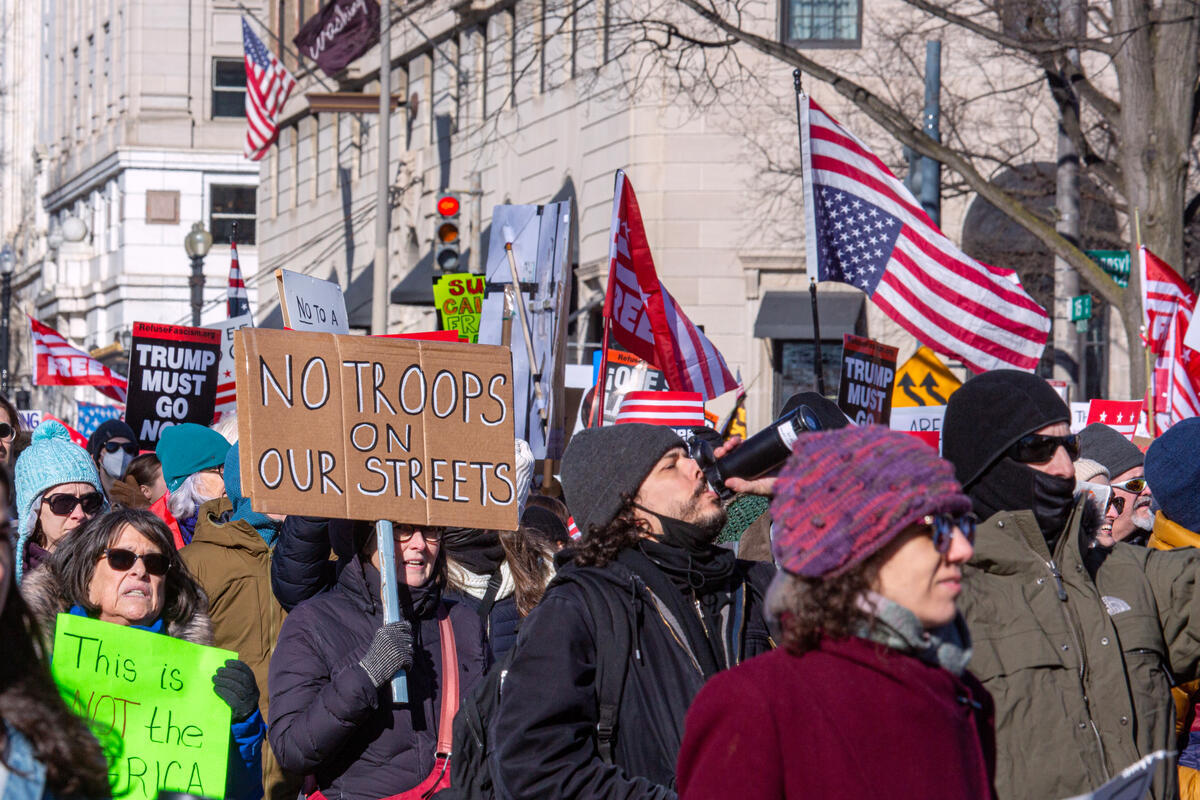
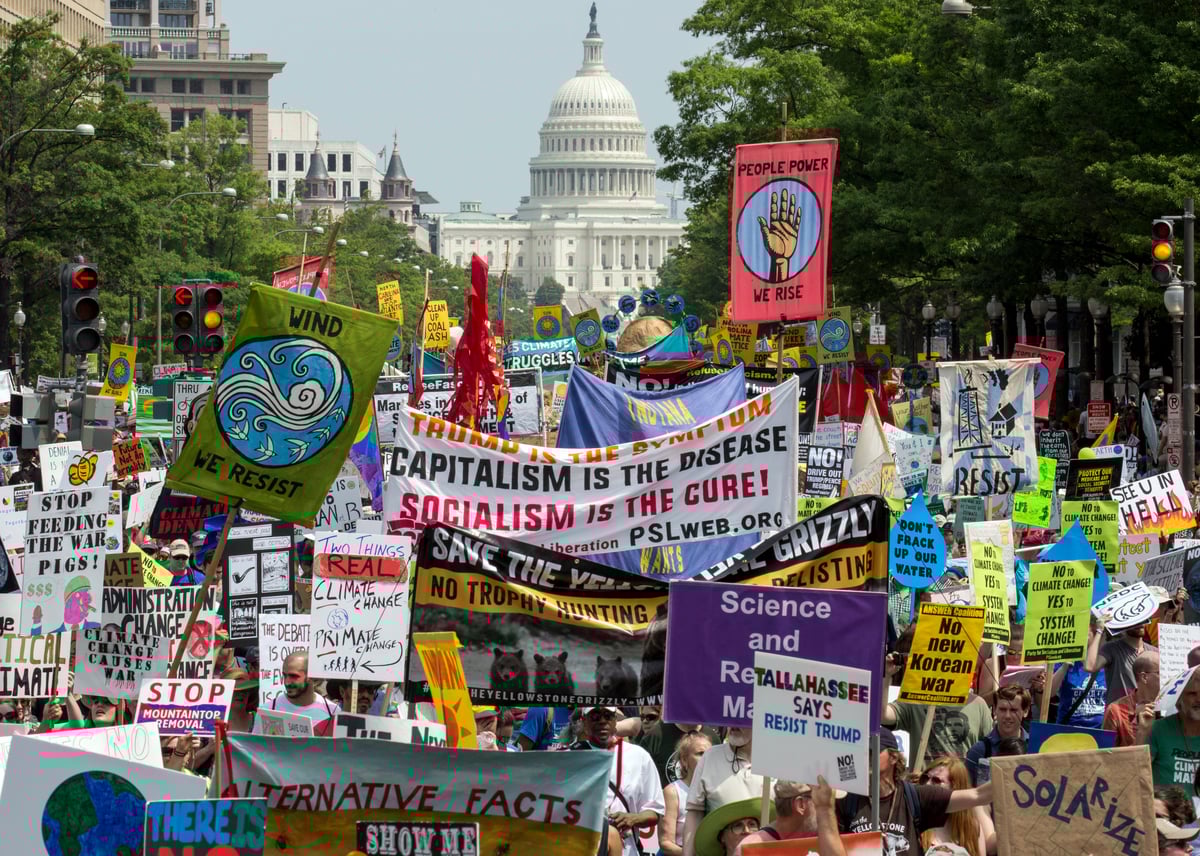
 USA – Protesters gather near the White House on the one year anniversary of the Trump inauguration. January 20, 2026 marks one year of the second Trump administration.
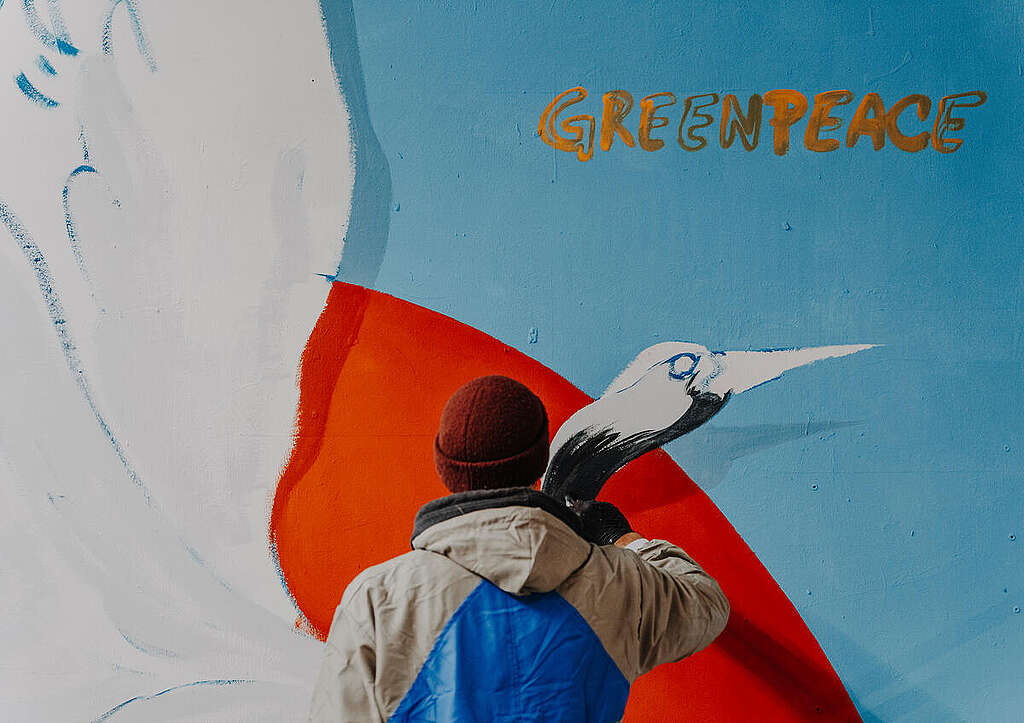
 Germany – Andreas Demko and Aurélien Pinder are creating a mural based on the story of Sadako Sasaki, victim of the atomic bombing of Hiroshima. She was diagnosed with leukaemia and began folding 1,000 paper cranes in order to regain her health. According to Japanese legend, cranes are considered a symbol of good luck, and Sadako’s story made them a global symbol of hope and peace. The mural is a further development of Daniel Ebert’s artwork.
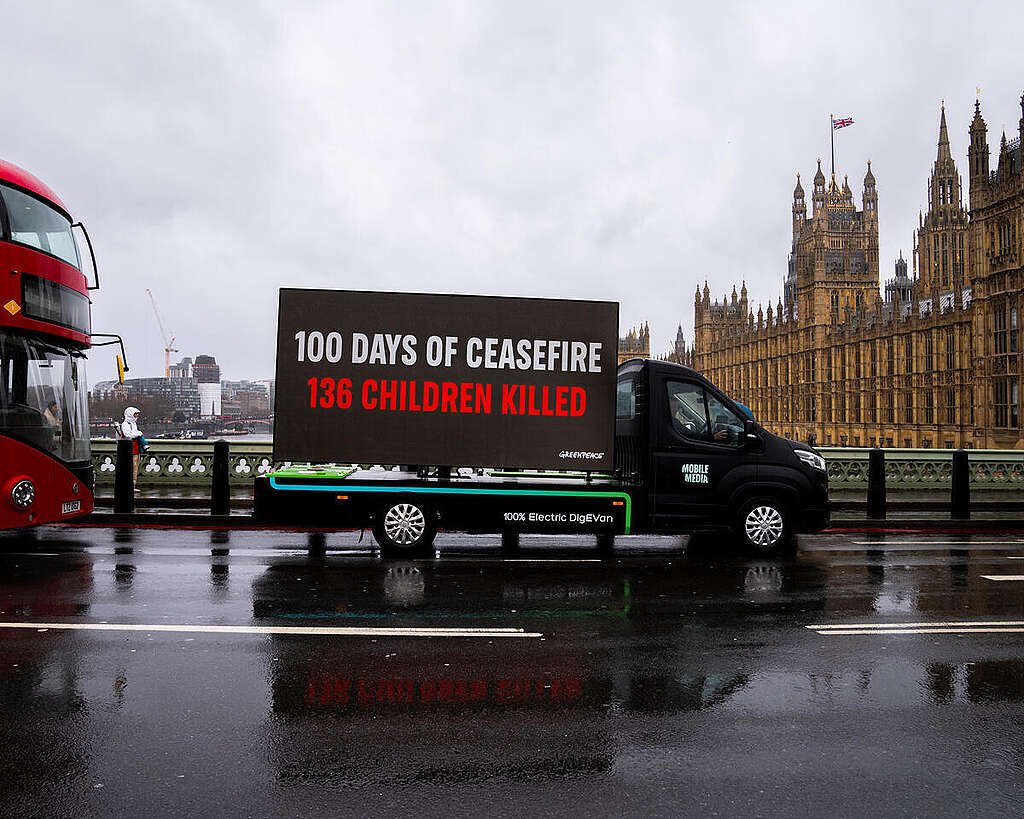
 U.K. – An electric advan, hired by Greenpeace UK, circles Westminster in London, to highlight the death and violence still happening in Gaza despite 100 days of the ceasefire. The government must stop selling weapons to Israel now.
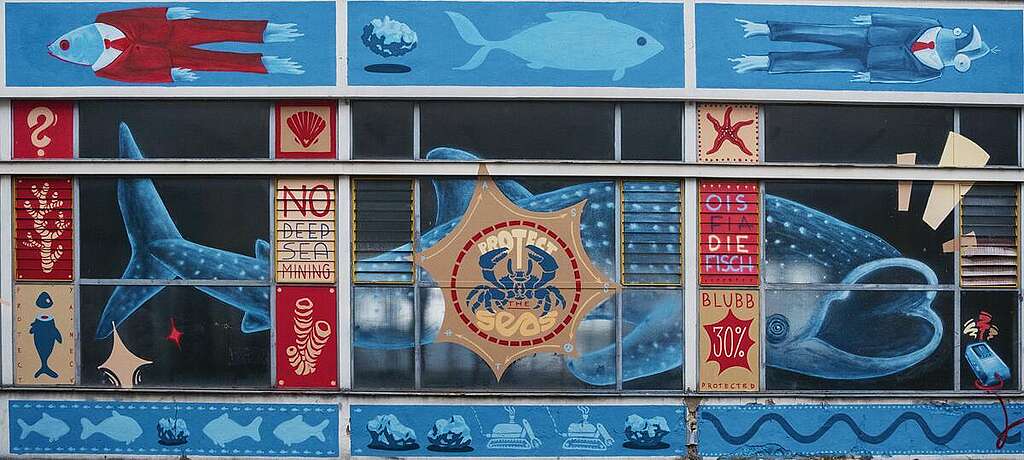
 Austria – Greenpeace Austria works with artist Gernot Passath to create a mural in Graz to celebrate the Global Ocean Treaty coming into force on the 17th January 2026.
 Germany – Greenpeace activists and volunteers march in the annual ‘We have had enough!’ protest for a more sustainable agriculture in Berlin. The environmental activists take to the streets with the Greenpeace pig, bee, banners, balloons and signs.
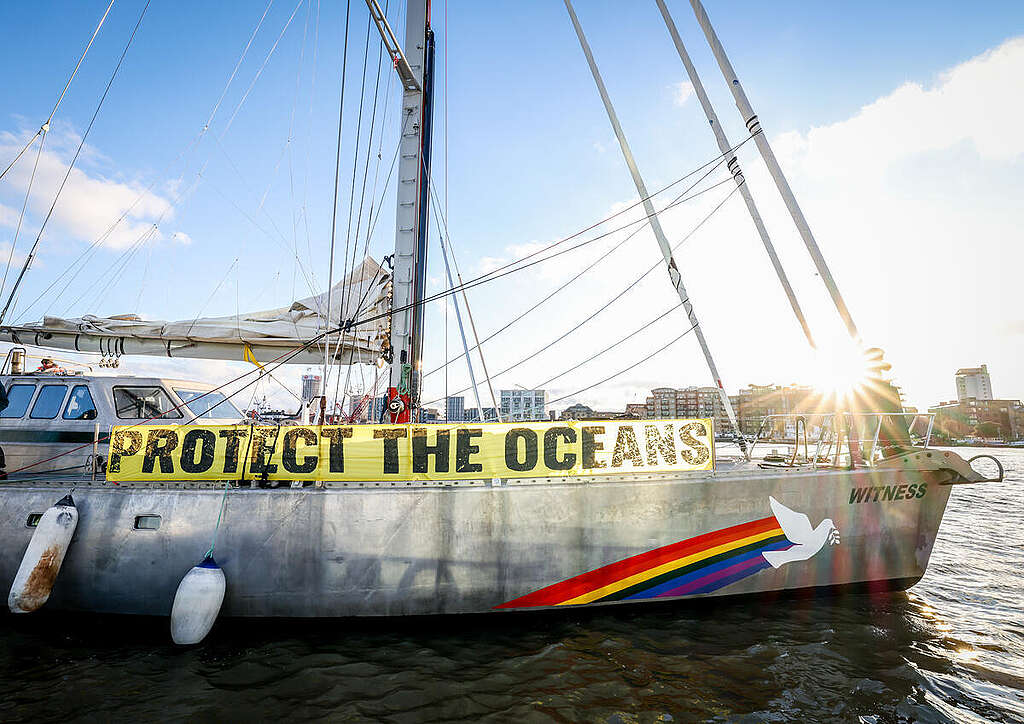 U.K. – The Greenpeace sailing vessel Witness arrives in London
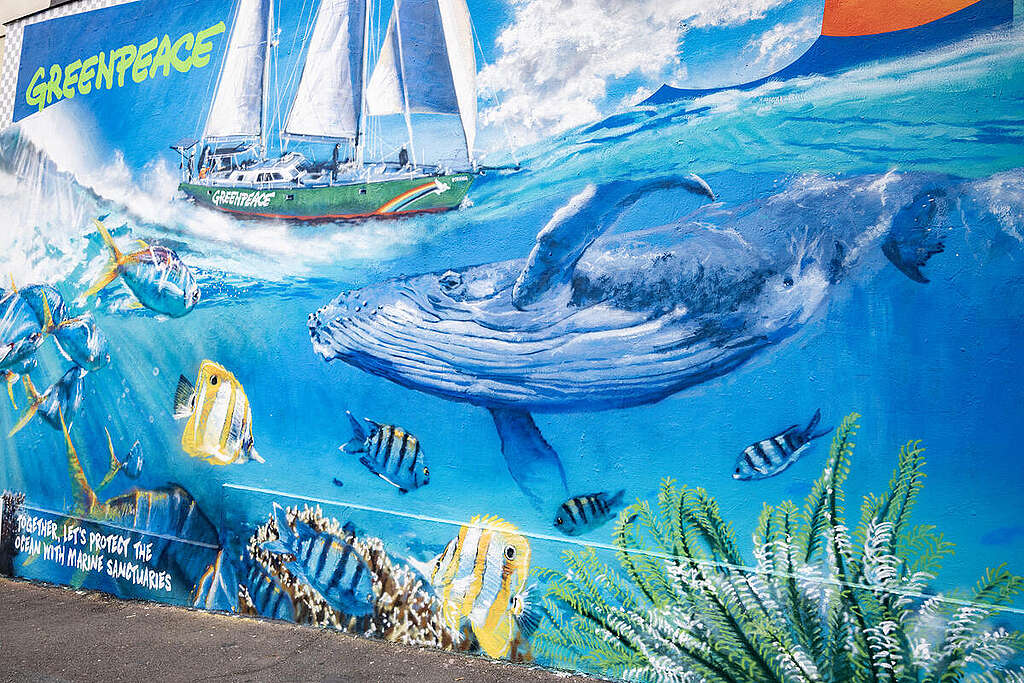
 Australia – To celebrate the Global Ocean Treaty formally entering into force on Saturday 17 January 2026, Greenpeace Australia unveils a large scale mural in Brisbane, Australia by award-winning artist Gus Eagleton.
Leading by example? How the private jets at Davos send a devastating message to future generations
Jackie Zamora
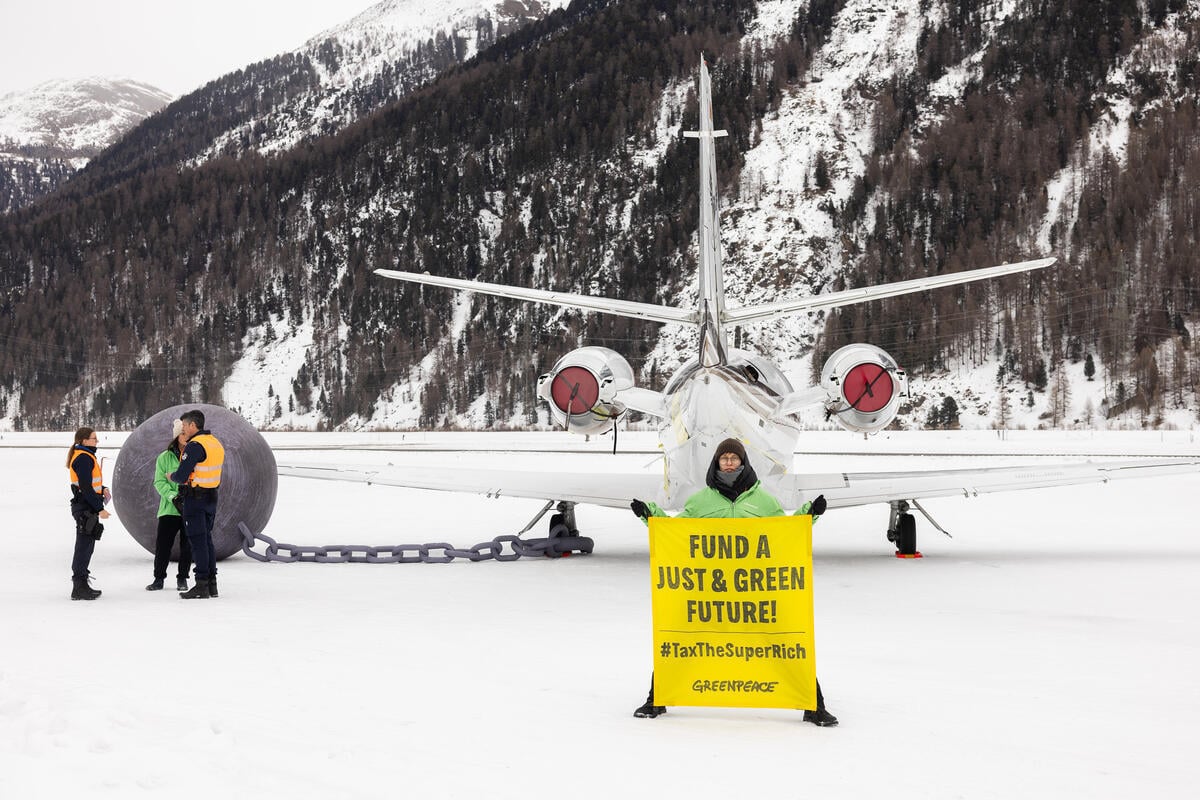
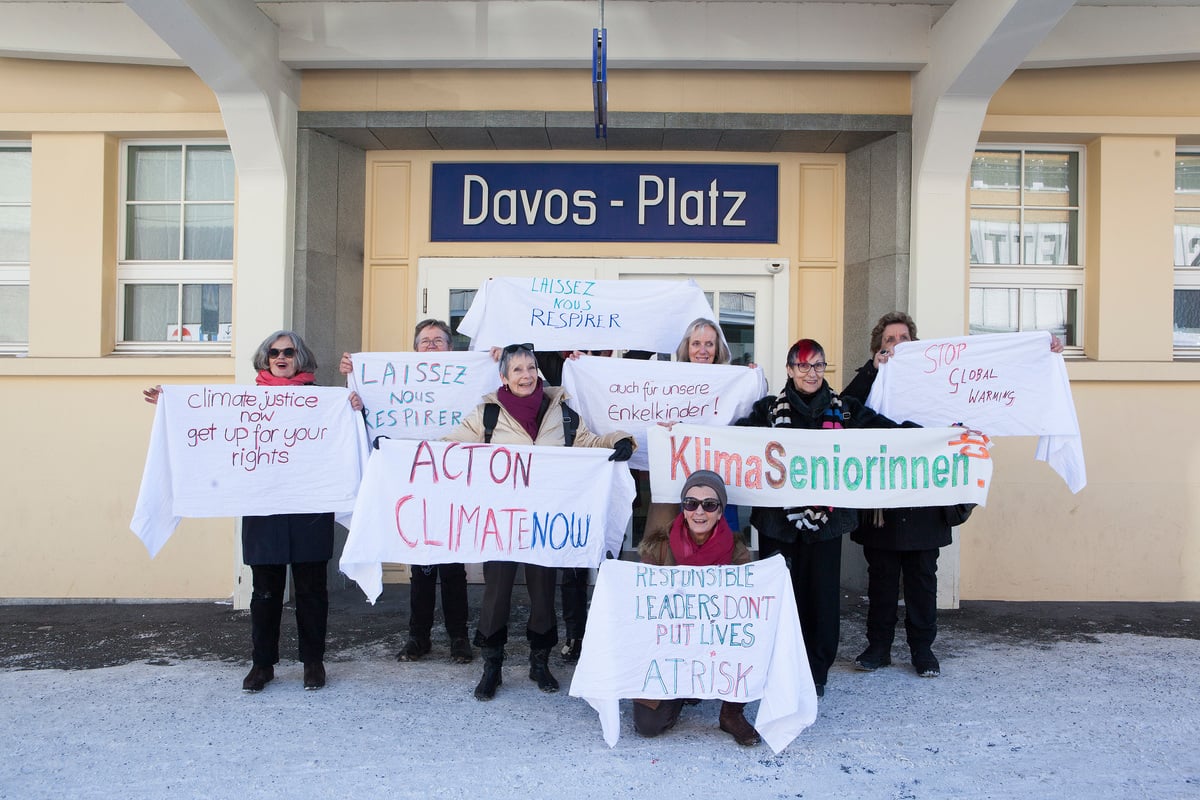
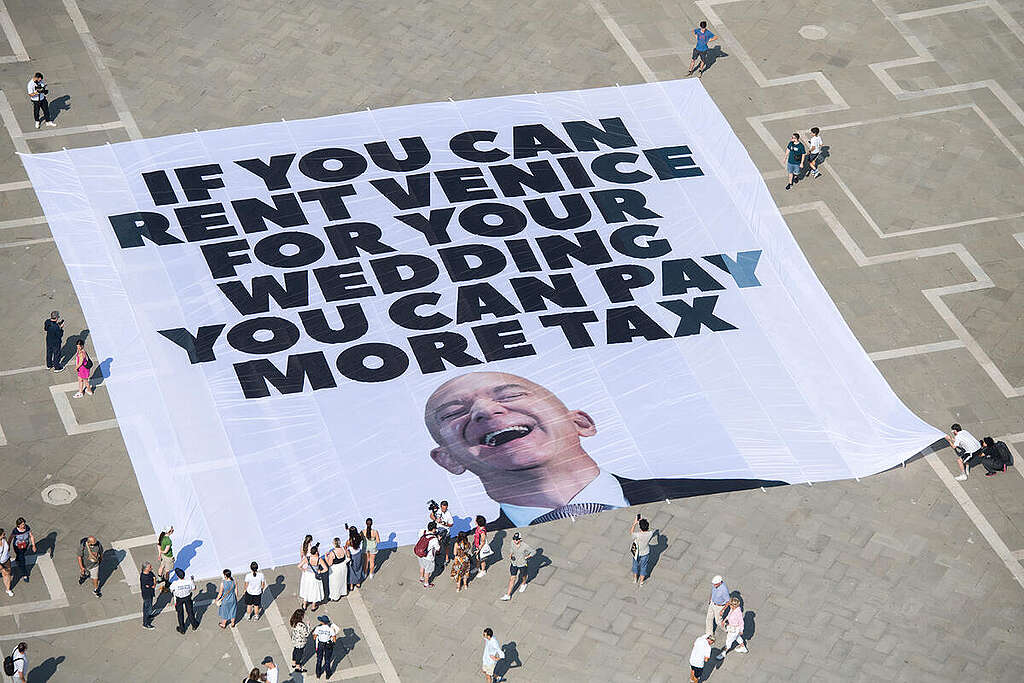
While families around the world are facing the impacts of the climate and nature crises in their communities, some of the world’s most powerful leaders are attending the World Economic Forum (WEF) in Davos, Switzerland in the most polluting and most unequal form of transport: private jets. What does this teach our children about responsibility and fairness? Every January, world leaders and corporate figures meet for the World Economic Forum to discuss the issues facing our world. This year, the main themes are climate and inequality. Attendees are mostly delegates from global businesses, governments, civil society and academia representatives. Ultimately, the goal of Davos forum is to have a dialogue on global challenges and develop tangible solutions to “improve the state of the world.” On paper it sounds good, right? However, before the climate talks even begin, many of these leaders are arriving to the Davos forum on private jets. The number of these flights is increasing every year at an alarming rate. New analysis from Greenpeace CEE reveals that private jet flights to Davos have tripled since 2023 and risen 10% compared with last year. Around 70% of the private jet routes could have been travelled by train within a day or with a night train and connection train. When world leaders arrive by hundreds of private jets to a forum meant to protect the future of younger generations, they send a heartbreaking message to kids everywhere: that our children’s tomorrow does not matter as much as adult convenience today. Even worse, many of the private jets swarming Davos are reportedly chartered or owned by ultra-wealthy individuals. Data shows that billionaires, on average, pay much lower effective tax rates than the rest of us, meaning the richest people often contribute less proportionally while benefiting from systems that impact our children’s future. According to Oxfam, the number of billionaires surpassed 3,000 for the first time last year, and the level of billionaire wealth is now higher than at any time in history. Meanwhile, one in four people globally face hunger and children around the world are significantly impacted by extreme weather events and climate change. Taxes can fund sustainable public transport, classrooms, doctors, and a liveable planet, yet through loopholes and special breaks, the super-rich are allowed to give far less than they can and should. This leaves families around the world to shoulder the cost through punitive taxes and austerity measures that cripple social services, while young people are learning that greed and self-interest comes before community and integrity. When governments don’t tax the super-rich fairly they are allowing resources to be drained from the younger generations and the systems that are supposed to keep them safe and allow them to thrive. When world leaders fail to lead by example, we have a responsibility to hold them accountable. We urge governments to support fair global tax rules to protect the future of children and the planet. Billions in public funds generated from a modest 1-2% tax on the ultra-wealthy could fund universal basic services such as green affordable housing, sustainable heating and cooling, quality healthcare, and public transport, creating a safer, cleaner world for everyone. Children are intelligent and perceptive. They see, hear and feel everything that happens around them, and they are trusting us grown-ups to do the right thing: to be courageous, to keep them safe and to stand up for protecting the planet they will inherit. It’s important that our kids know that many young people are making themselves heard for our planet, and they can too! If they show interest or curiosity, we have free educational resources available to them to learn, explore and take action. We must not give up, and there is still time to act! Discuss with them positive and inspiring stories around the world or in your own community. Together we can act for fairness and achieve a future they can look forward to with hope. Together, let’s urge governments to tax the super-rich and fund a green and fair future. Texte intégral (1753 mots)
What happens at Davos?
Mixed signals and misplaced money
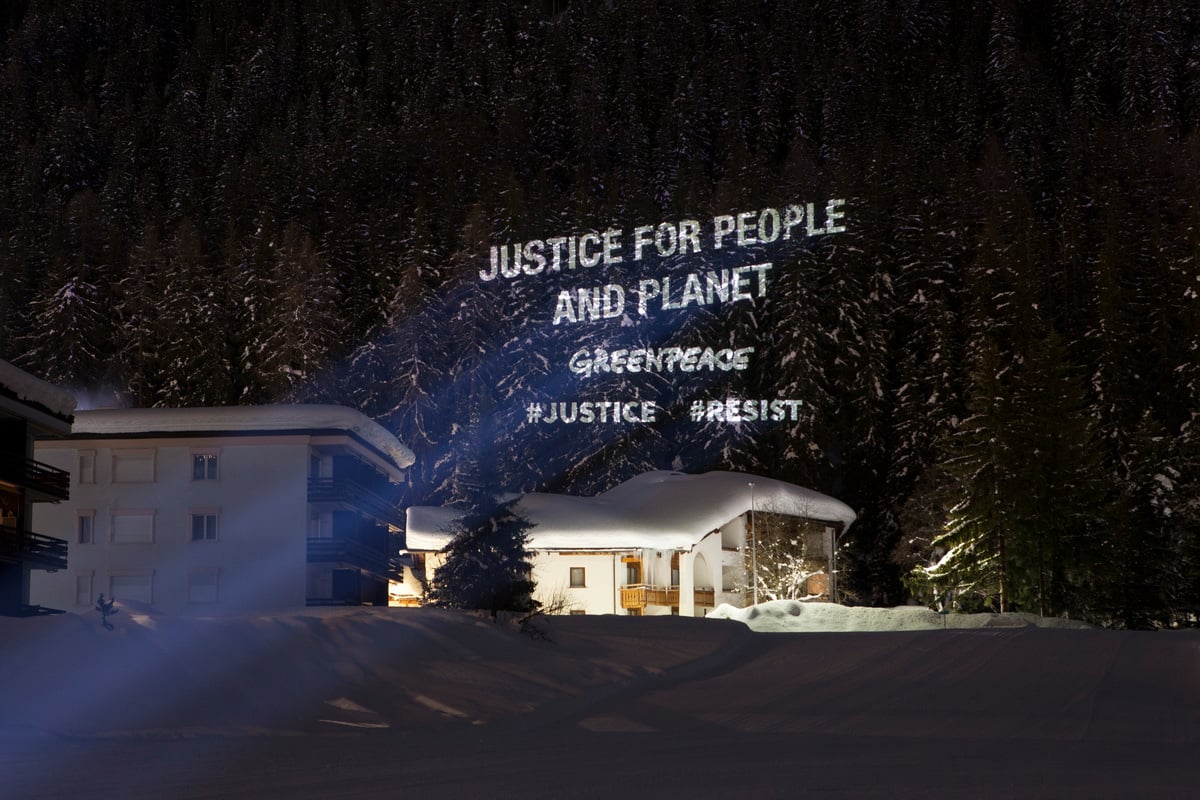
It doesn’t have to be this way
Educational resources for parents and educators
Greenpeace Denmark statement on Greenland
Greenpeace International
Greenpeace Denmark shared the following statement on Greenland on 15 January 2026. Copenhagen, Denmark – Greenpeace Nordic deeply deplores the continued hostility and threats issued towards the people of Greenland by President Donald Trump, his administration and circle of advisors. The people of Greenland must have the right to peacefully determine their own future free from coercion and violence. Regardless of the Trump-regime’s misguided concerns for international security or its desire to pillage and plunder for rare-earth minerals or other resources, the Trump administration needs to be held accountable by the constitutional statutes of the US and the international community. With the recent, illegal military intervention in Venezuela fresh in mind, and the blatant threats towards the people of Greenland, the international community must now act decisively to uphold international law and prevent further harm. ENDS Contact: Greenpeace International Press Desk: +31 (0)20 718 2470 (available 24 hours), pressdesk.int@greenpeace.org (171 mots)
Follow the oil: The logic behind Trump’s first year, foreign policy chaos
John Noel
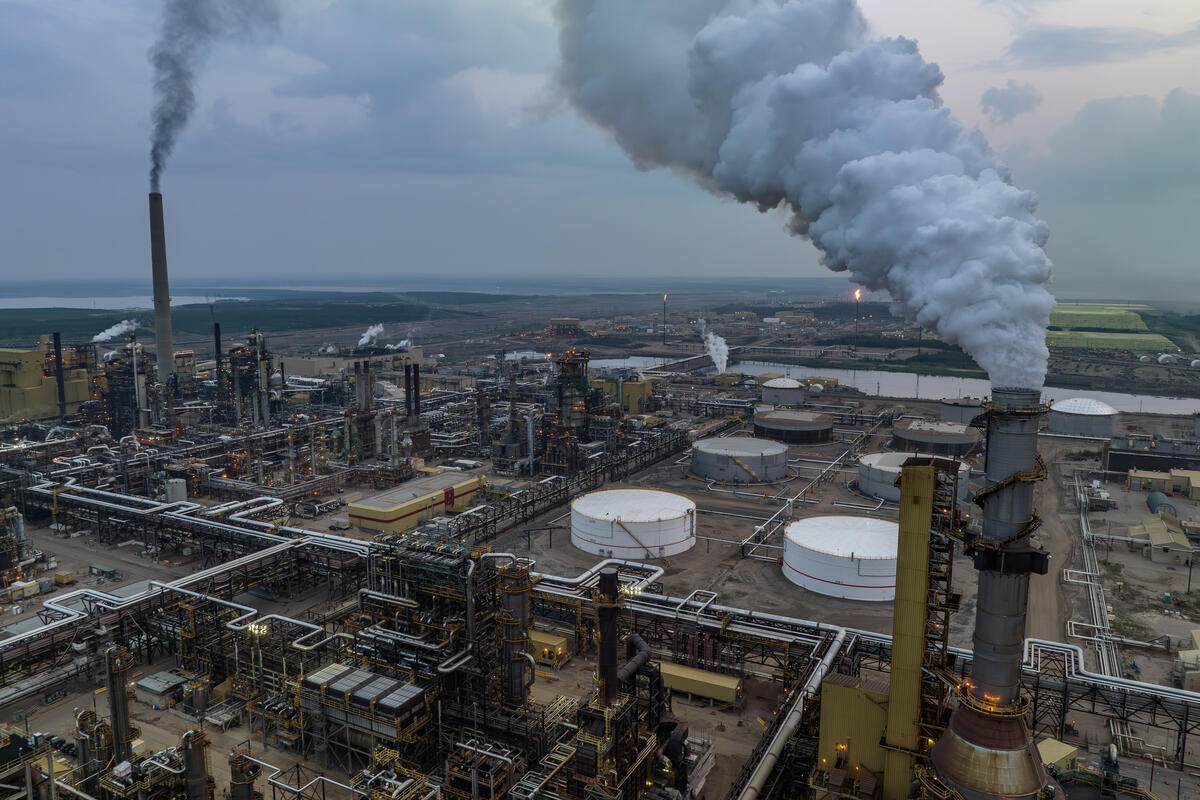
It feels like a decade…But somehow, Donald Trump has only just clocked one year back in the White House. From intervention in Venezuela to threats against Greenland, from trade tariffs against allies to rambling letters to other Heads of State, it’s an extraordinary and growing list. Once your head stops spinning from the daily deluge of ridiculousness, you can step back and note a common thread running through the madness once you follow the money and the interests behind Trump’s rhetoric. While many were basking in the aftermath of New Year celebrations, US forces were descending into Venezuela to abduct a leader while leaving his regime very much intact. While the US administration suggested an initial rationale of curbing the flow of drugs into the US, the facade soon dropped with Trump declaring control over resources, and in particular oil. “At least US$100 billion will be invested by Big Oil,” Trump said ahead of a White House meeting with representatives of major oil and gas corporations. Trump added that the US and Venezuela were “working well together” to rebuild the nation’s dilapidated oil and gas infrastructure. Despite claiming “US first”, Trump’s actions expose an intent to put the wealth and power of a tiny group of fossil fuel interests and ultra wealthy elites ahead of the wellbeing of US citizens, and the sovereignty and future of people in the countries where he meddles. This is about who controls resources, who profits from them, and who pays the price. Venezuela holds the largest proven crude oil reserves in the world and has long been a target of external pressure, sanctions and geopolitical interference. Trump’s move is the latest intervention in a long pattern of strategic meddling. The Trump administration has tried to portray the move as bolstering US energy security and weakening rivals, but the reality is very different. US households are unlikely to experience any relief at the pump from these interventions. Global crude markets in 2025 already had a surplus of supply over demand, meaning oil prices were low despite a lack of production in Venezuela. And even the most conservative estimates suggest that the Venezuelan oil industry requires investment of more than US$100 billion just to get back to the levels of decades ago. In Trump’s US, it is likely that taxpayers will be on the hook for these costs as Trump socialises the costs to subsidise the private businesses of his donors and supporters. Funneling billions into fossil fuel infrastructure will deepen the global dependence on oil and gas that is driving the climate crisis and biodiversity loss, even when the science tells us there is no room in a safe future for new fossil fuel development. The human costs of resource-driven foreign policy are profound. Military solutions tied to resource control are fundamentally incompatible with international law, human rights, and climate justice. People around the world are already paying the price for decisions made in boardrooms and political offices far from their communities. But as Trump pushes for control of Venezuela’s oil, others are working towards an alternative vision: a world that moves beyond fossil fuels rather than fighting over them. In April, Colombia will host the First International Conference on the Just Transition Away from Fossil Fuels, co-organised with the Netherlands, bringing together governments, Indigenous Peoples, Afro-descendant communities and climate advocates to chart a just transition away from oil, gas and coal. The conference is not about who controls oil reserves, but who shapes our future. The era of fossil fuels must end if we are to avoid the most catastrophic impacts of the climate crisis. What we’re seeing is not random chaos. It’s a clash between two very different visions of the future; one anchored in old power structures built on fossil fuel domination, and the other rooted in climate justice, and sustainable energy for all. People and planet deserve a foreign policy that reflects their interests, peace, safety, economic security, and a stable climate. Reclaim the moral compass: a call for courageous leaders John Noel is a Senior Strategist with Greenpeace International. Texte intégral (1291 mots)
Reclaim the moral compass: a call for courageous leaders
Greenpeace International
To leaders at all levels of government, business, and institutions: We write from many places, in many languages, with one shared hope: to live in a world where peace is the norm, the climate is stable, and our children inherit a future that is brighter than our present. You have a responsibility to reclaim the moral compass. Peace is not a prize, it is a human right. True leadership is built on solidarity, not threats. A healthy society isn’t measured by the profits of a few, but by the well-being of the many. Success isn’t about who wins, it’s about who thrives. We are defined by what we save, not what we take. Donald Trump has said “My own morality. My own mind. It’s the only thing that can stop me.” He and his circle of emboldened autocrats backed by polluting empires and their billionaire owners threaten our shared future. We, the people, across generations and borders, call on leaders everywhere to reclaim the moral compass: This is the responsibility of true and courageous leadership in our time: to resist the billionaire takeover of our culture and future, to rise above the hateful rhetoric of division, and to renew our commitment to decency and each other. We, the people, rally behind leaders who are brave enough to reclaim the moral compass. It will take all of us to break through the fear and noise and show our leaders a better path Texte intégral (536 mots)
Bonaire climate ruling: Moment of truth for Dutch State’s failing climate policy
Greenpeace International
The Hague – On January 28, the District Court of The Hague will rule on whether the Netherland’s current climate policy is unlawful for failing to adequately protect the people of the Caribbean island and Dutch special municipality of Bonaire from the impacts of the climate crisis. It’s the first European adaptation ruling on overseas territories that could have groundbreaking legal consequences worldwide. While the Dutch government does a lot to protect citizens in the European part of the Netherlands from the impacts of climate change, no similar protections have been provided to Bonaire residents, who are already struggling with extreme heat and extreme weather. Bonaire artist and plaintiff, Jackie Bernabela said the Greenpeace-supported lawsuit offers “a glimmer of hope” for the people of Bonaire. “We are resisting the slow erosion of hope. Because hope is the cornerstone of action, and we need action now. Wealth will not save you when the water rises. Power will not save you when disease spreads. Only compassion, courage, and unity. That faintest spark of hope that I and others have can awaken a future worth fighting for,” she said. Eight residents of Bonaire and Greenpeace Netherlands are demanding that a climate adaptation plan be put in place to protect Bonaire locals and that the government reduce Dutch CO2 emissions to zero more quickly. On Wednesday, January 28, at 2 p.m., the District Court of The Hague will rule in the Climate Case Bonaire against the Dutch state. This is the first case in Europe where a judge may order a country to implement an adaptation policy protecting people from the impact of climate change. In the recent International Court of Justice (ICJ) Advisory Opinion in The Hague, the judges unanimously ruled that states must keep global warming below 1.5 degrees and that their climate plans must show maximum ambition, taking into account historical emissions and economic capacity. The Bonaire case is the first major test case on a state’s mitigation and adaptation ambition following the ICJ’s groundbreaking ruling and could set a precedent with global relevance. Marieke Vellekoop, Director of Greenpeace Netherlands, said: “This climate case is crucial. First and foremost for the people of Bonaire, but also for all of us. It is unacceptable and unjust that residents of Bonaire are already experiencing the effects of climate change every day, such as heat and sea level rise, while receiving less protection than people in the European part of the Netherlands. It should not matter where you were born: everyone has the right to protection against floods, storms, and extreme heat.” ENDS Notes: 1. The ruling can be followed at 2 p.m. CET on Wednesday, 28 January 2026 via a livestream from the court. The verdict will be published at 3 p.m. CET on Rechtspraak.nl. 2. Would you like to be present in court? Contact the communications department at voorlichting.rbdh@rechtspraak.nl 3. A fifth of Bonaire could disappear 4. Dutch government puts big polluters above climate and people 5. Bonaire climate case Contacts: Laura Polderman, Greenpeace Netherlands Press Officer: +31 (0)6 2900 1140, laura.polderman@greenpeace.org Greenpeace Netherlands general press number: +31 (0)6 2129 6895 Texte intégral (883 mots)
Previous research commissioned by Greenpeace Netherlands shows that the climate crisis is already affecting daily life on Bonaire. Residents are at great risk due to rising sea levels, extreme weather, and dying coral reefs. People are already experiencing the health effects of extreme heat. Without action, up to a fifth of the island could disappear under water by the end of this century.
Politicians have watered down climate policy in recent years, and the (outgoing) cabinet will not meet the climate target set out in the Climate Act. Instead, the cabinet is providing fossil fuel subsidies and abolishing the CO2 tax for companies. Nor have any decisions been made in the formation of the new government that are necessary to reduce emissions. “The cabinet is protecting major polluters at the expense of the climate and people. We must not only keep the climate targets in sight, we must achieve them and accelerate them. The time for delaying and postponing must now really be over. Only with robust and fair measures can emissions be reduced more quickly. We demand that the Netherlands at least comply with the Climate Act and make its fair contribution to achieving global climate goals. This means reducing CO2 emissions to zero as quickly as possible. This is possible within the Netherlands by 2040,” said Vellekoop.
Residents of Bonaire and Greenpeace have taken joint legal action to demand fair climate policy from the Dutch state. They are being assisted by lawyers from Kennedy van der Laan and Prakken d’Oliveira. The hearings took place on October 7 and 8, 2025, and were attended by the eight plaintiffs from Bonaire.
High-level visits in Davos expose the crisis of billionaire-led “global leadership”, Greenpeace says
Greenpeace International
Davos, Switzerland – As US President Donald Trump arrives in Davos on the first anniversary of his second term, amid escalating trade threats against Europe, Greenpeace warns that the World Economic Forum (WEF) is once again giving a platform to policies that deepen climate chaos, economic instability and inequality. Clara Thompson, European Lead Campaigner at Greenpeace Germany said: “Trump’s visit exposes the contradiction at the heart of Davos. Leaders who abandon climate action, threaten economic confrontation and deepen inequality are treated as global leaders, while the costs are pushed onto everyone else. After years of Trump-style politics, we know what happens when extreme wealth runs the show: democracy, climate action and equality are always the first to lose.” Thompson said Trump’s presence reflects a broader shift toward billionaire-driven politics, reinforced by the World Economic Forum’s own Global Risks Report 2026, which warns of escalating geo-economic confrontation and climate breakdown, while failing to confront the role of extreme wealth and corporate power driving both. “Trump’s presidency shows what happens when billionaire power goes unchecked. Big tech, fossil fuel interests and powerful political leaders shape global decisions without democratic accountability — and forums like Davos continue to legitimise this model. The WEF is quick to name global risks, but it refuses to look in the mirror and confront the actors fuelling them,” Thompson added. Thompson stressed Europe must respond to rising tensions with the US by reducing dangerous dependencies. This should begin with the withdrawal of the pledge to purchase USD 750 billion worth of US energy, as well as the ending of all additional agreements to purchase US liquefied gas. “Doubling down on US fossil gas and unregulated tech monopolies is a strategic mistake. Instead of deeper reliance on billionaire driven power politics, Europe needs energy independence, strong regulation of big tech and fair global tax rules.” Greenpeace calls on governments to support the UN-led Tax Convention negotiations, arguing that none of the risks discussed in Davos can be solved without systemic reforms of global tax rules that should include making the super-rich and corporate polluters pay their fair share.[1] ENDS Notes: [1] Media briefing: UN Tax Convention Contacts: Clara Thompson, European lead campaigner, Fair Share project, Greenpeace Germany: +49 1758530226, clara.thompson@greenpeace.org Christine Gebeneter, European communications lead, Fair Share project, Greenpeace Austria: +43 664 8403807, christine.gebeneter@greenpeace.org Greenpeace International Press Desk: +31 (0)20 718 2470 (available 24 hours), pressdesk.int@greenpeace.org (488 mots)
Greenpeace Pictures of the Week
Greenpeace International
Climate defenders in Australia, the Rainbow Warrior bids farewell to Brazil, and celebrating the Global Ocean Treaty coming into force in the U.K. Here are a few highlights of Greenpeace work around the world over the first weeks of 2026. Greenpeace has been a pioneer of photo activism for more than 50 years, and remains committed to bearing witness and exposing environmental injustice through the images we capture. To see more Greenpeace photos and videos, visit our Media Library. Texte intégral (1685 mots)
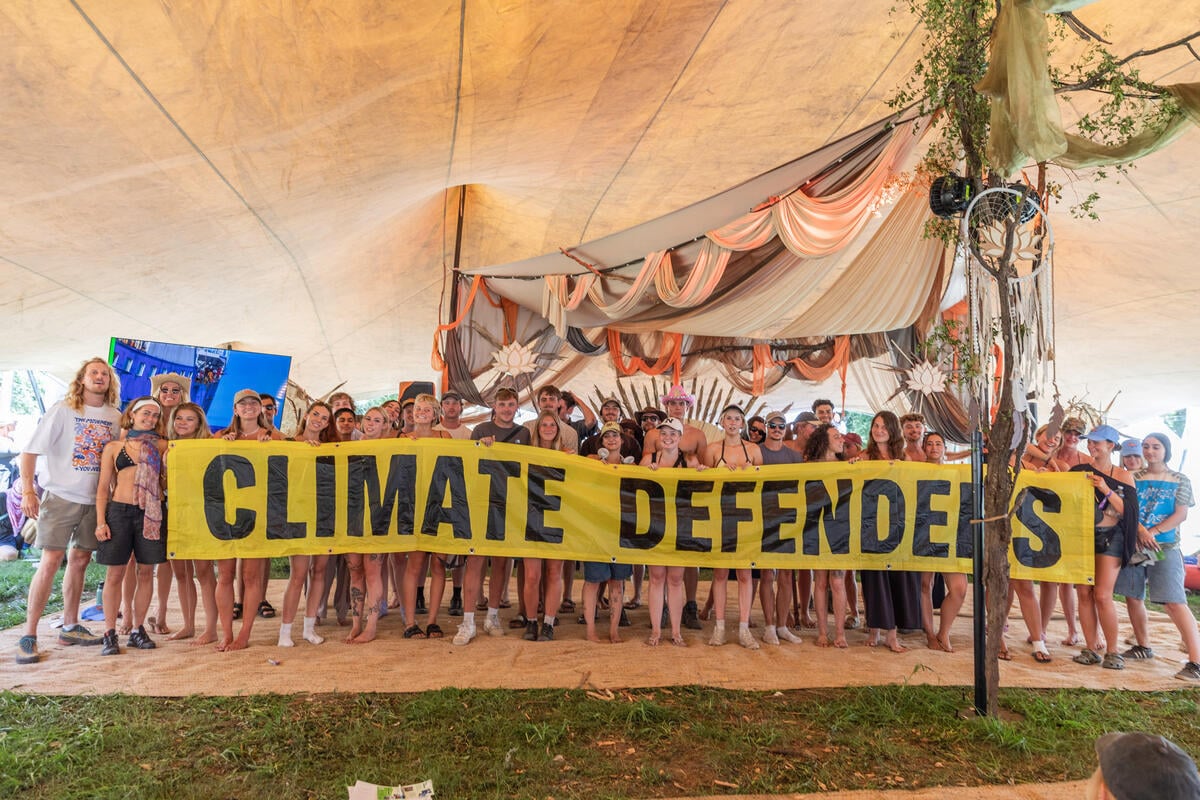 Australia – Greenpeace Australia Pacific returns to Lost Paradise Music & Arts Festival in Glenworth Valley, New South Wales, to celebrate the beauty of our wild planet and the movement working to protect it.
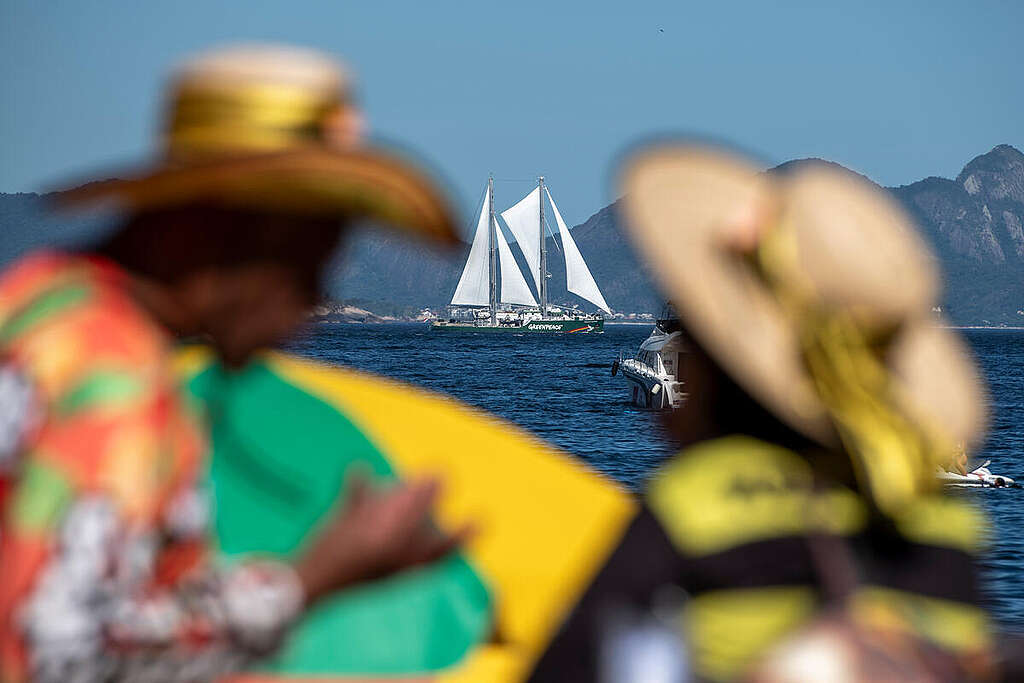
 Brazil – The Greenpeace ship Rainbow Warrior bids farewell to Brazil after a tour across three capital cities following COP30 in Belém.
 Germany – Greenpeace celebrates the imminent entry into force of the historic UN High Seas Protection Agreement (BBNJ) with an art event in front of the Brandenburg Gate. Greenpeace activists lay out a 5 x 8 metre 3D floor banner that transforms the square into a colourful underwater world. The agreement will enter into force worldwide on 17 January 2026. Ratification by Germany is still pending. Seen here is Greenpeace Campaigner Ocean Protection Franziska Saalmann.
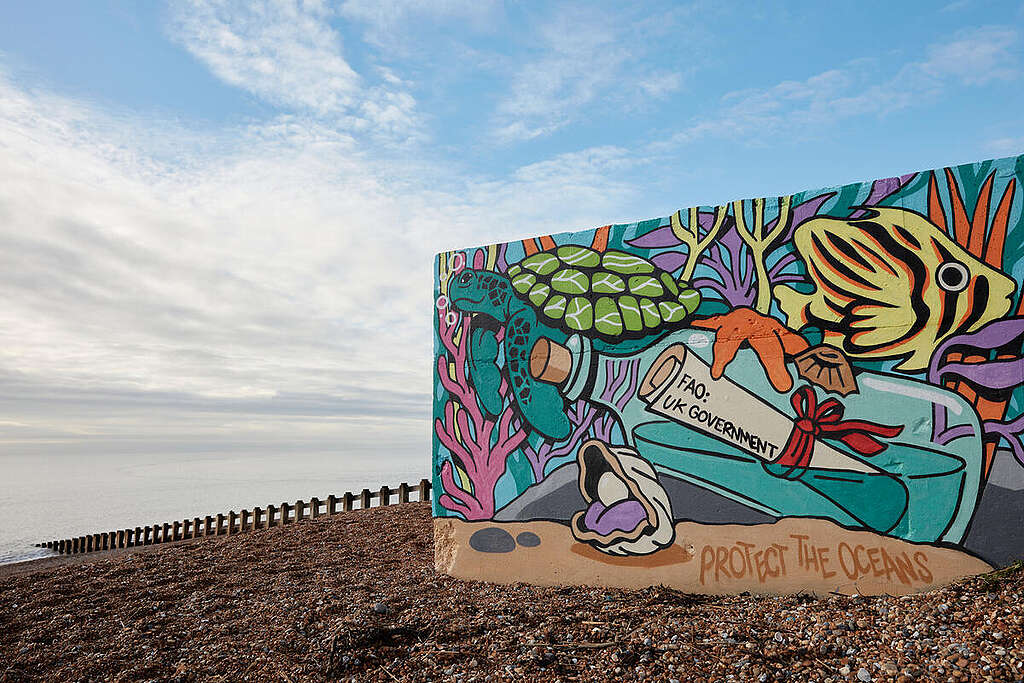 U.K. – A striking new mural is unveiled in St Leonards-On-Sea, East Sussex, to celebrate a landmark moment for global ocean protection: the High Seas Treaty coming into force. The UK artwork, by Richt, features a message in a bottle, a call to action for the UK government to complete signing the ocean Treaty into law as soon as possible, joining the 81 nations including China, France, Japan, Spain, Mexico and Brazil who have already done so.
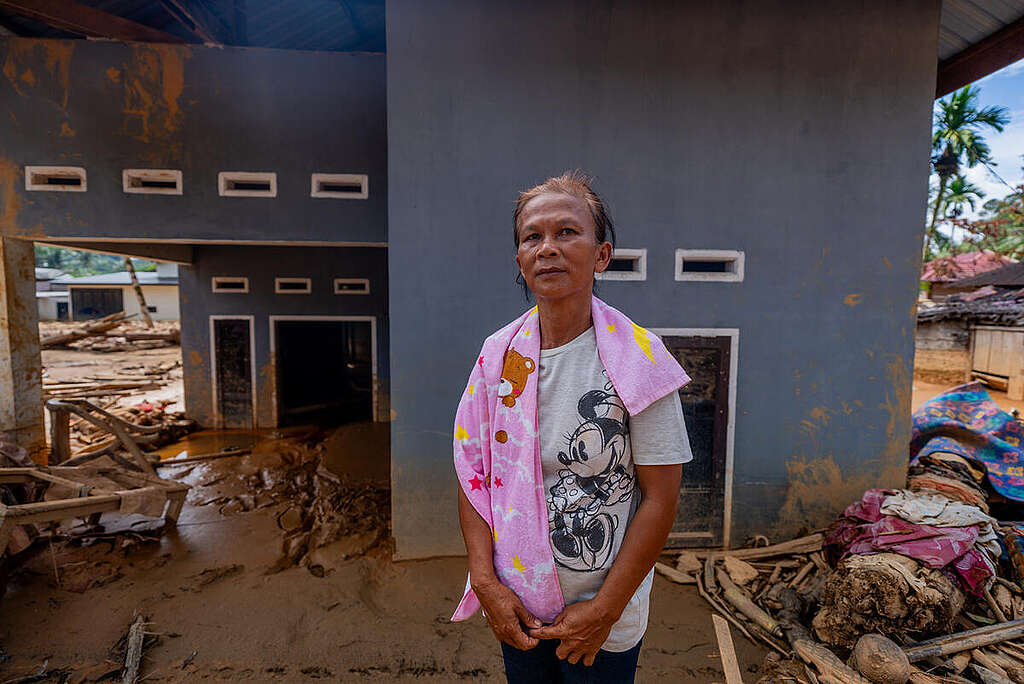
 Indonesia – A portrait of Mariasi Aritonang in front of her home that was affected by the flash floods in Tukka Subdistrict, Central Tapanuli, North Sumatra.
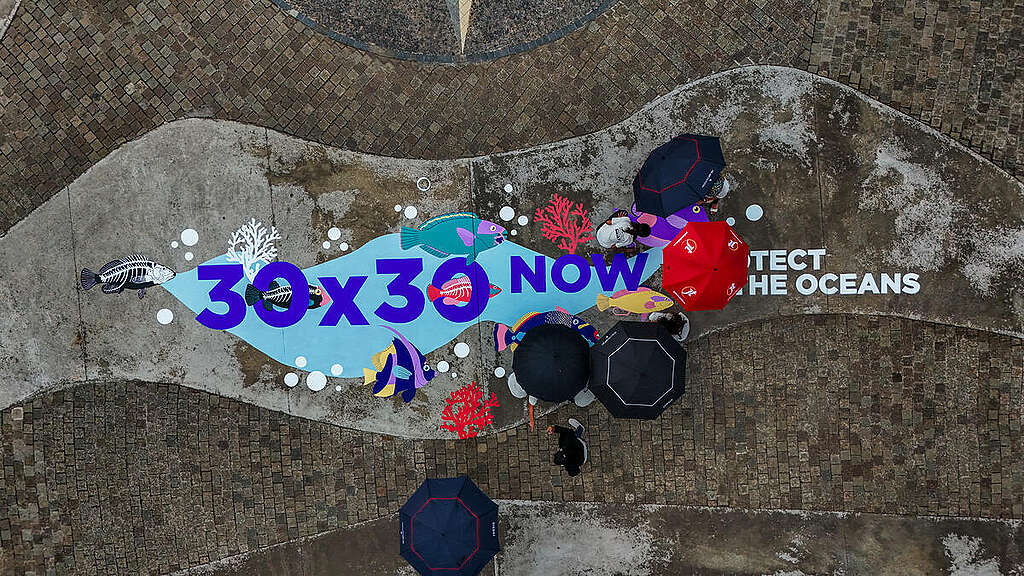
 Mauritius – Community-led art installation across Ubay Island, Bohol to commemorate thAs part of the official launch of the Greenpeace Africa office in Mauritius, our creative partner, renowned Mauritian artist Daphne Doomun, created a powerful mural artwork designed to inspire hope, raise awareness, and reinforce the urgent need for ocean protection. This visual statement symbolizes the collective responsibility of communities, institutions, and individuals to safeguard marine ecosystems and reflects Greenpeace Africa’s commitment to protecting at least 30% of the world’s oceans by 2030 for the benefit of present and future generations.
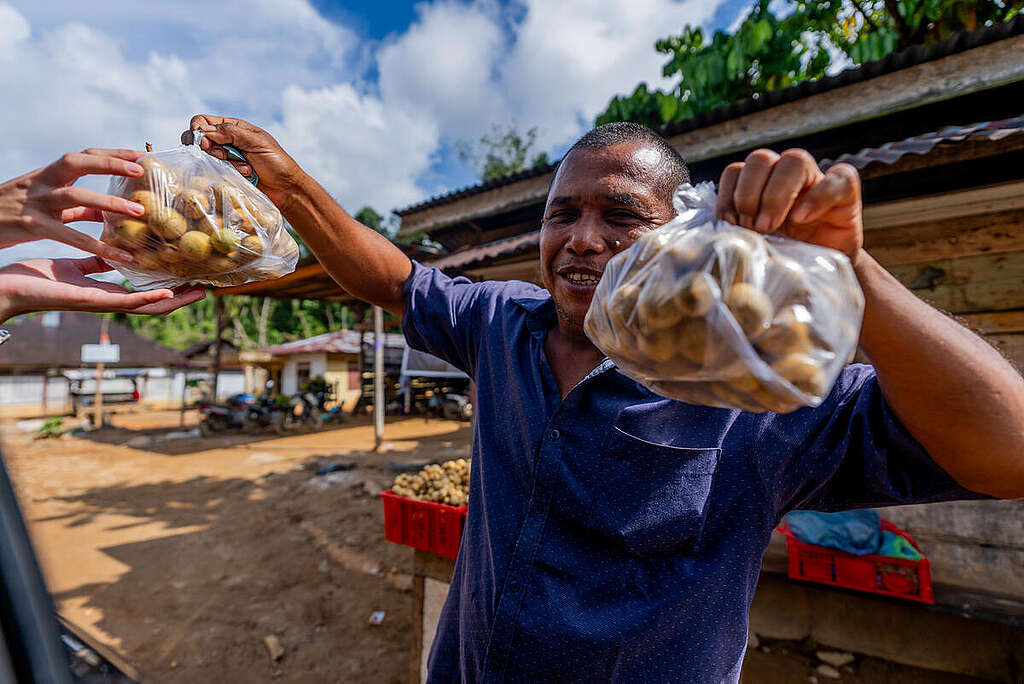 Indonesia – Aid and Donations being delivered after the flash floods in Tukka Subdistrict, Central Tapanuli
Bon Pote
Actu-Environnement
Amis de la Terre
Aspas
Biodiversité-sous-nos-pieds
Bloom
Canopée
Décroissance (la)
Deep Green Resistance
Déroute des routes
Faîte et Racines
Fracas
F.N.E (AURA)
Greenpeace Fr
JNE
La Relève et la Peste
La Terre
Le Lierre
Le Sauvage
Low-Tech Mag.
Motus & Langue pendue
Mountain Wilderness
Negawatt
Observatoire de l'Anthropocène